
Let Gemini Do It: Generative AI for Businesses on Google Cloud

June 25, 2026
Following the announcements at Google Cloud Next and Google I/O '26, companies face a barrage of technical updates. How can we convert this flood into real business value? The answer lies in digesting this information strategically.
In this article series, we explore what generative AI for business means on Google Cloud today. We adopt a business perspective to move from experimentation to operations at scale:
- Data: How to map and leverage it.
- Enterprise AI: How to scale without compromising security.
- Agentic Programming: The new operational standard.
The Leap from Curiosity to Operations with Generative AI for Business
We have said it before, and we will keep saying it: artificial intelligence is advancing rapidly. Therefore, it is no longer just a tool that answers questions. Today, it is turning into an entity capable of acting autonomously.
When discussing AI agents, our virtual companions no longer just process information. On the contrary, they execute complex business objectives from start to finish.
"Agents are the next version of how we leverage AI. We are moving from chatbots that answer questions to agents that understand objectives and perform tasks autonomously from start to finish." — Raquel Fernández, Head of Partner Sales at Google Cloud.
As a result, this evolution meets a critical organizational need. Companies seek to achieve massive operational scale without compromising corporate security. For this reason, the conversation shifts from technical curiosity toward real execution and governance. Lo venimos diciendo y lo seguiremos diciendo: la inteligencia artificial está cada vez más lejos de ser solo una herramienta que se limita a responder para convertirse en una entidad que actúa.

From Copilots to Agents with Gemini Enterprise
We previously mentioned the operational leap companies are taking. However, this massive deployment of agents introduces critical risks and challenges:
Inadvertent Security Breaches
An agent could expose confidential data to employees without access authorization.
Technological Chaos
This causes a loss of control and governance. It happens when hundreds of agents use disparate technologies across multiple clouds.
Financial Mismanagement (FinOps)
If we do not monitor deployments properly, agent maintenance might cost more than the savings generated.
Lack of Impact Measurement
Without clear maturity metrics, organizations will not know the real value these agents deliver to the business.
Gemini Enterprise Agent Platform, The Solution to Shadow IT
Google Cloud’s answer to this paradigm is Gemini Enterprise. This infrastructure manages autonomous workflows to optimize processes. Furthermore, it always guarantees corporate security and data privacy.
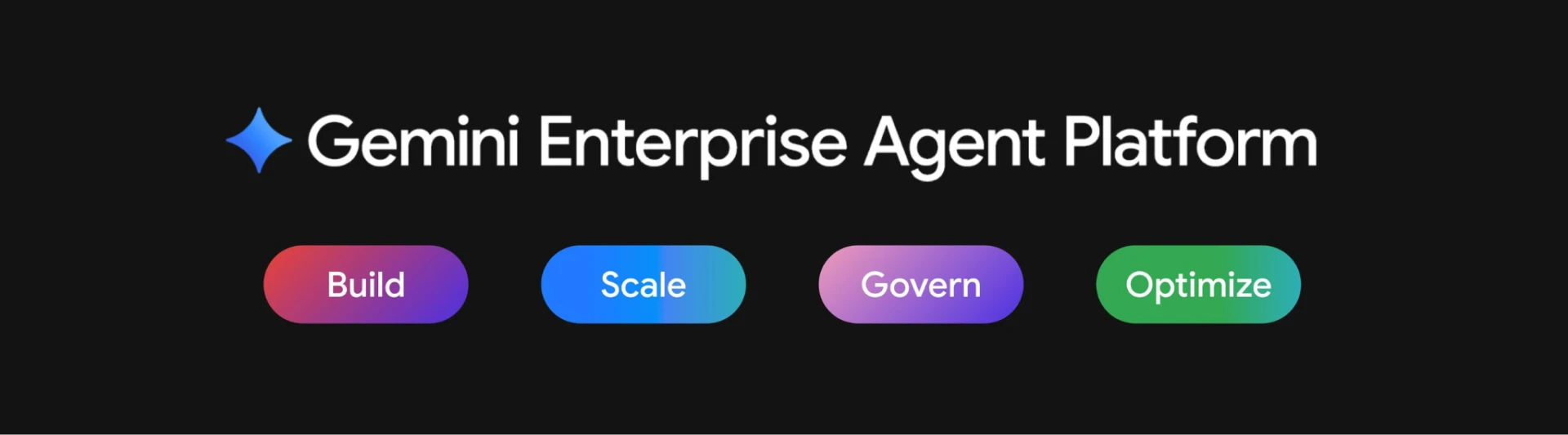
The platform that marks the turning point in 2026 is built on this environment: Agent Platform. In this sense, governance becomes the differentiating factor this year.
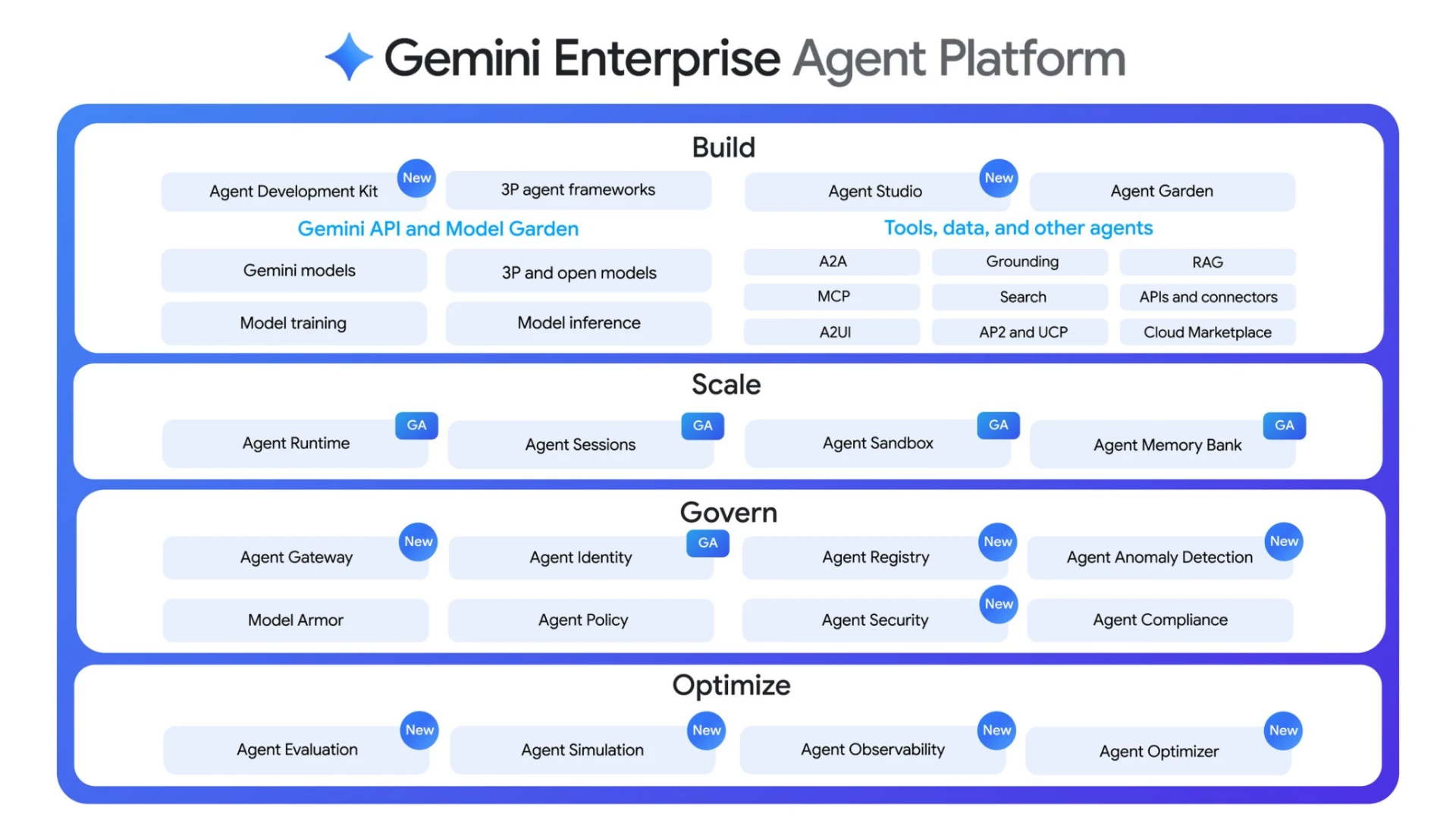
As Santiago Alarcón, Google Cloud Business Director at Sngular, explains, Gemini Enterprise Agent Platform helps fight Shadow IT through a unified control plane. This system ensures every agent complies with corporate standards:
-
Unified Control Plane: It functions as a command center from which the company coordinates all its AI agents.
-
Open Interoperability: It does not force companies into the Google ecosystem. The platform controls agents across any infrastructure.
-
Multi-Technology Integration: It integrates agents developed with competitor technology (such as Anthropic). It works through open standards (like MCPs and A2A) and leverages powerful partnerships with third-party tools like Atlassian.
-
Enterprise Security: The platform applies a cross-cutting security layer over open environments. In this way, it gives organizations the necessary guarantees to operate without compromising their systems.
-
Result-Oriented Creation: First, companies solve data challenges using Agentic Data Cloud. Afterward, Agent Platform allows teams to physically build the agents responsible for meeting real business goals.
Ready to take the leap?
It is time to stop asking AI for suggestions and start giving it responsibilities. The next step consists of agentic systems integrated into your company's full processes.
At Sngular, we help organizations transition from using AI as an assistant to deploying agent-based systems capable of executing real-world processes.
Together with Google Cloud, we design data platforms ready for the agent-based era: secure, scalable, and ready to integrate with AI systems in enterprise environments.
Contact our team of experts and start leading the Agent revolution.
Our latest news
Interested in learning more about how we are constantly adapting to the new digital frontier?

Insight
September 17, 2026
The Role of Junior Professionals in the Age of AI: Perspectives, Challenges, and the Future of Talent in the Tech Industry

Insight
July 27, 2026
Nebrija Education Group scales its student services with Jira Service Management: a unified, data-driven experience for more than 15,000 students
Tech Insight
July 1, 2026
The New Era of Agentic Programming: Antigravity 2.0 and Sngular Gen

Tech Insight
June 18, 2026
No Data, No AI: Agentic Data Cloud and Data Sovereignty