Agentic Development: Building Software Is No Longer About Writing Code

June 26, 2026
Just a few years ago, talking about artificial intelligence in software development meant discussing tools that could help developers write code faster. Today, the conversation has changed dramatically.
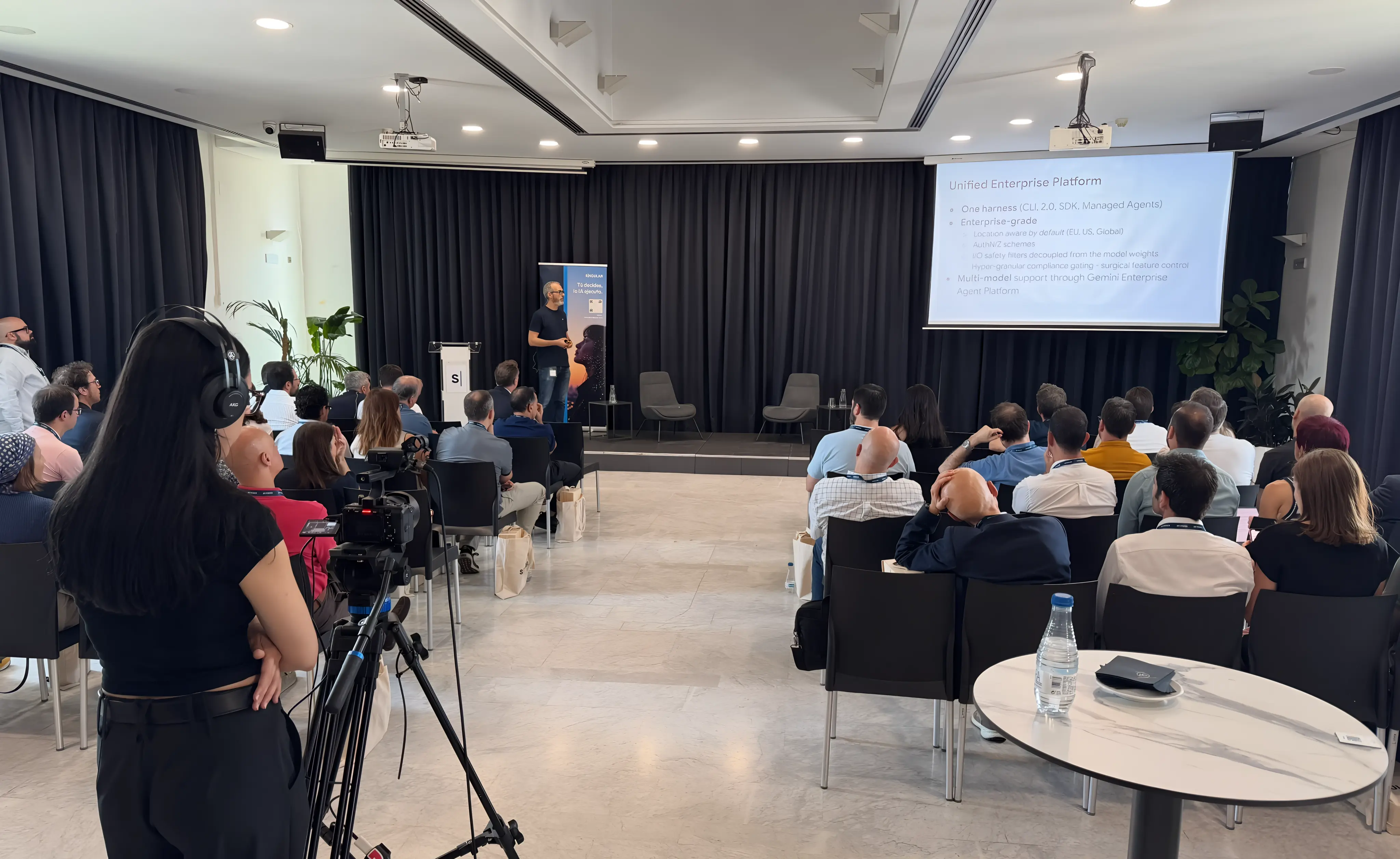
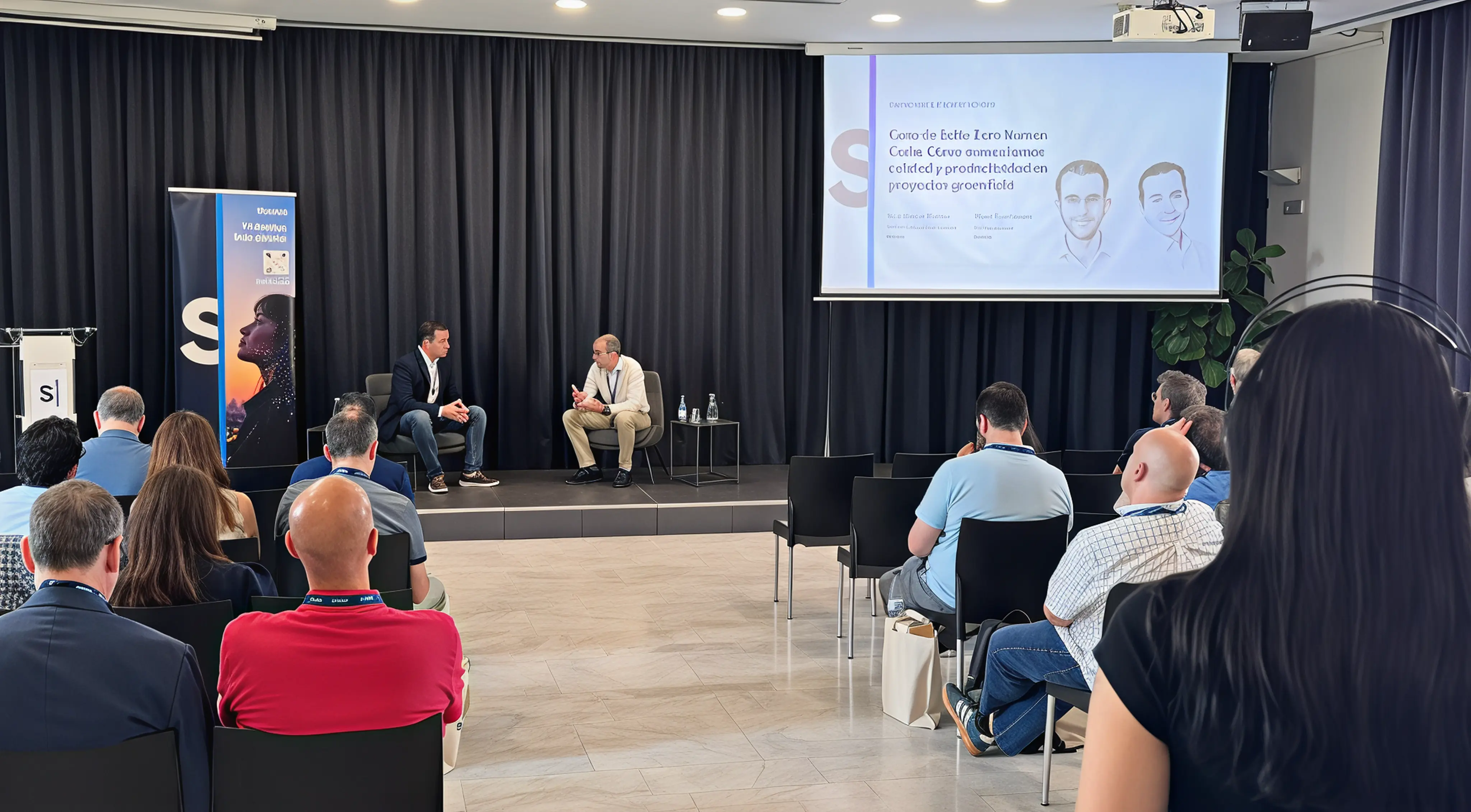
That is why we were so excited to host our first Agentic Development event at Madrid's Círculo de Bellas Artes. We brought together technology, business, and digital transformation leaders alongside experts from Sngular, Google, and companies such as Ferrovial to exchange ideas, share real-world experiences, and explore a question that more and more organizations are beginning to ask:
Are we simply incorporating AI into our software development processes, or are we witnessing a much deeper paradigm shift?
As the morning unfolded, the answer became remarkably consistent.
Although each speaker approached the topic from a different perspective, they all converged on the same conclusion: agentic development is not about programming faster—it is about building software in an entirely different way.
That is precisely why this was only our first event. We are convinced this conversation is only just beginning and that, much like the emergence of generative AI, we are entering a new era that will transform not only how software is developed, but also how organizations imagine, design, and build digital products.
These were some of the key ideas that shaped the day.
1. Agentic Development Is No Longer About Copilots
Only a few months ago, the spotlight was on tools that could help developers write code more efficiently. Today, that conversation has evolved. We are no longer talking solely about AI assistants, but about specialized agents capable of collaborating with one another, taking ownership of specific tasks, and participating throughout the entire software development lifecycle.
The real shift is not that AI writes code faster. It is that AI is beginning to take responsibility for significant parts of the software construction process, forcing us to rethink how software projects are conceived.
As Albert Meco, Transformation Director at Sngular, explained while quoting Matt Welsh: "The conventional idea of writing a program is going to die. Enterprise software will no longer be developed line by line by humans, but instead built from specifications."
This does not mean developers will disappear. It means the way they create value is changing.
2. Specifications Become the New Strategic Asset
If there was one idea that echoed throughout the event, it was this: a project's knowledge no longer resides primarily in its source code. Instead, it is shifting toward specifications, business rules, architecture, and acceptance criteria.
Code is no longer the primary asset—it becomes the consequence of well-defined specifications. In other words, software starts being built from decisions rather than implementation.
This idea aligns closely with Specification Driven Development (SDD), a methodology that focuses efforts on defining the problem correctly so AI agents can generate solutions that are consistent, traceable, and maintainable.
3. The Real Challenge Is Organizational and Cultural
Surprisingly, none of the speakers identified technology itself as the biggest challenge. Instead, the consensus pointed elsewhere: the greatest challenges are organizational. Processes designed for a different way of building software, emerging roles, evolving methodologies, and cultural transformation all affect both technical and business teams.
As Julio Manuel Navarro, Head of Engineering and IoT CoE at Ferrovial's Digital Hub, summarized: "AI amplifies everything. It amplifies the good... and it also amplifies all the little problems we already have."
Adopting agentic development is not simply about introducing new AI tools. It requires rethinking how business and technology collaborate, how decisions are made, and how teams are organized.
4. Software Engineering Takes Center Stage Again
For years, much of software development focused on implementing code correctly. With agentic development, attention shifts back to the earliest stages of a project.
Understanding the problem, designing the architecture, eliminating ambiguity in requirements, and validating decisions before implementation now become significantly more important.
Paradoxically, the rise of AI restores prominence to classic software engineering disciplines that had gradually been overshadowed by implementation itself.
5. Developers Are Evolving—Not Disappearing
Another major topic of discussion was the impact this transformation will have on technical professionals.
Rather than replacing developers, agentic development reshapes their role. Their value increasingly lies in designing specifications, orchestrating AI agents, validating outputs, and bridging business needs with technology.
The discussion even touched on a certain "identity crisis" that many technical professionals may experience, as the skills that historically distinguished software developers become increasingly democratized.
As Bienvenido Sielva, Technical Office Managing Team at Sngular, put it: "The developer whose superpower was mastering a programming language has just lost that superpower."
6. The Most Important Work Happens Before Coding Begins
Another shared conclusion was that the greatest effort is no longer concentrated during implementation but at the very beginning of a project.
Clearly defining requirements, removing ambiguity, designing a solid architecture, and establishing acceptance criteria become the foundation upon which AI agents operate.
AI does not reduce the importance of these activities—it makes them even more critical. The better the specifications, the better the outcomes.
7. Methodology Matters More Than Tools
AI tools are evolving at an extraordinary pace. Every few weeks, new models emerge with increasingly impressive capabilities, making it tempting to believe competitive advantage depends on adopting the latest technology.
However, one of the strongest conclusions from the event was exactly the opposite. Organizations need robust methodologies that enable them to leverage whatever technologies emerge in the future. Tools will continue to change; sound ways of working will endure.
8. Agentic Development Is Already Delivering Significant Business Impact
One of the case studies presented during the event demonstrated how an enterprise application can be built entirely using a Zero Human Code approach. Jesús Antonio Riolobos, Head of FullStack Development at Sngular, explained how the project reduced delivery time to one-third of that of a traditional development approach, while achieving over 95% test coverage, complete traceability between requirements and implementation, and high standards of quality and security. As Jesús summarized during his presentation: "We completed the entire project—from the initial idea to production—without writing a single line of code."
A complementary perspective came from Julio Manuel Navarro, Head of Engineering and IoT CoE at Ferrovial's Digital Hub, who shared how the company is driving this transformation internally. His main takeaway was not technological, but organizational: "The technology works reasonably well. The real bottleneck turned out to be ourselves and our organizations."
Two different experiences ultimately reinforced the same conclusion: when the focus shifts from writing code to defining specifications correctly, the rules of software development change completely.
The Competitive Advantage Starts Today
Perhaps the best way to conclude the event is to recognize that we are still in the early stages of this transformation.
The tools will continue evolving. New models will emerge. New ways of working will appear. Waiting until everything is fully mature, however, is unlikely to be the best strategy.
Organizations that begin experimenting today, developing methodologies, and transforming their teams will be the ones best positioned when this new way of building software becomes the industry standard.
Because everything suggests this is not a passing trend.
We are witnessing the birth of a new way of building software.