How to Share Medical Images Between Hospitals and Give Patients Easier Access to Their Scans

July 30, 2026
Sharing medical images securely between hospitals is possible by connecting local systems to cloud-based exchange platforms. This technology gives doctors immediate access to X-rays, MRI scans and other diagnostic images, while allowing patients to manage their examinations digitally. By removing the need for physical media such as CDs, it speeds up second opinions, reduces administrative work and supports more efficient continuity of care.
Digital access to X-rays, MRI and CT scans gives patients greater control, makes second opinions easier and prevents continuity of care from depending on a CD.
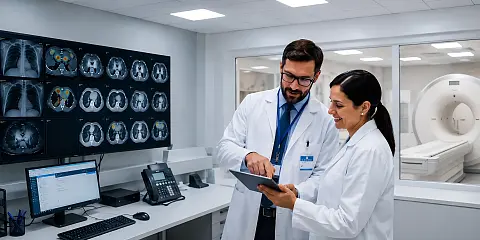
A patient has an MRI scan at one hospital and, several weeks later, needs another specialist to review it. The examination exists and is already digital. Yet getting it to the new healthcare provider may still require the patient to request a copy, travel to collect it, download files they do not know how to open or hand over a CD that the specialist may be unable to import into their system.
This situation is more common than it might seem. Although it is often regarded as a technology problem, its consequences extend far beyond information systems. It affects the patient experience, delays care, increases costs and makes collaboration more difficult between professionals who often work for different organisations.
Digital transformation has made it possible to digitise almost every type of diagnostic examination. However, digitising information does not necessarily make it easy to share. An MRI scan stored in a PACS still has very limited reach if it cannot follow the patient when they move to another hospital, request a second opinion or need to be assessed by a multidisciplinary team.
The paradox is clear: more medical images are being generated than ever before, yet too many barriers still prevent that information from reaching the people and places where it can provide real value.
A digital examination is not always an accessible one
Hospitals use specialised systems such as PACS and VNA platforms to store medical images. These solutions support the internal management of imaging data within each organisation, but they do not necessarily solve what happens when that information needs to leave it.
A hospital may have an MRI scan safely archived but no straightforward way to provide it to the patient or share it with another healthcare provider. As a result, sophisticated digital infrastructure continues to coexist with physical media, emails, phone calls and administrative processes that are difficult to track.
Interoperability becomes meaningful when it delivers a tangible outcome: enabling an authorised professional to access an examination without triggering a chain of administrative tasks, while ensuring that patients do not have to transport their own clinical information.
DICOM studies contain both images and metadata that must retain their clinical context. Sharing an examination therefore involves more than transferring a file. Access must be controlled, and the information must remain usable when it reaches its destination.
The patient should not be the integration layer
When two hospitals cannot exchange information easily, the patient is left to deal with the consequences. They may have to collect documents, remember where each examination took place, recover passwords, download files and work out how to deliver them to the next healthcare professional.
This model shifts an operational responsibility that belongs to the healthcare infrastructure onto the individual. It has an especially negative impact on people with limited digital skills or those already dealing with a complex clinical process.
Giving patients access does not mean leaving them alone with a folder full of files. It means providing a clear, understandable channel through which they can view their examinations and share them securely and selectively. Autonomy is not simply about possessing the information; it is about being able to use it without unnecessary barriers.
When access is properly designed, a second-opinion process can begin sooner, referrals require fewer administrative steps and the new specialist has more context from the very first appointment. It also reduces the likelihood of examinations being repeated because physical media have been lost, access has failed or systems are technically incompatible.

What a medical image-sharing system needs to deliver
An effective solution must fit into the hospital’s existing clinical environment rather than creating parallel processes or adding unnecessary steps for patients and professionals. To achieve this, it should address four key areas:
- Simple access for patients. Viewing and sharing examinations should be intuitive and should not depend on physical media, specialist software or complicated procedures.
- Security and control. The organisation must be able to determine who can access the information, for how long and with which permissions. It should also be possible to restrict or revoke access whenever necessary.
- Integration with clinical workflows. Images should become part of professionals’ everyday work and connect with the PACS, electronic health record, patient portal and other hospital applications.
- Interoperability between organisations. The platform should make it possible for hospitals with different systems, vendors and configurations to exchange information without having to replace their existing infrastructure.
Idonia: giving patients control over their examinations
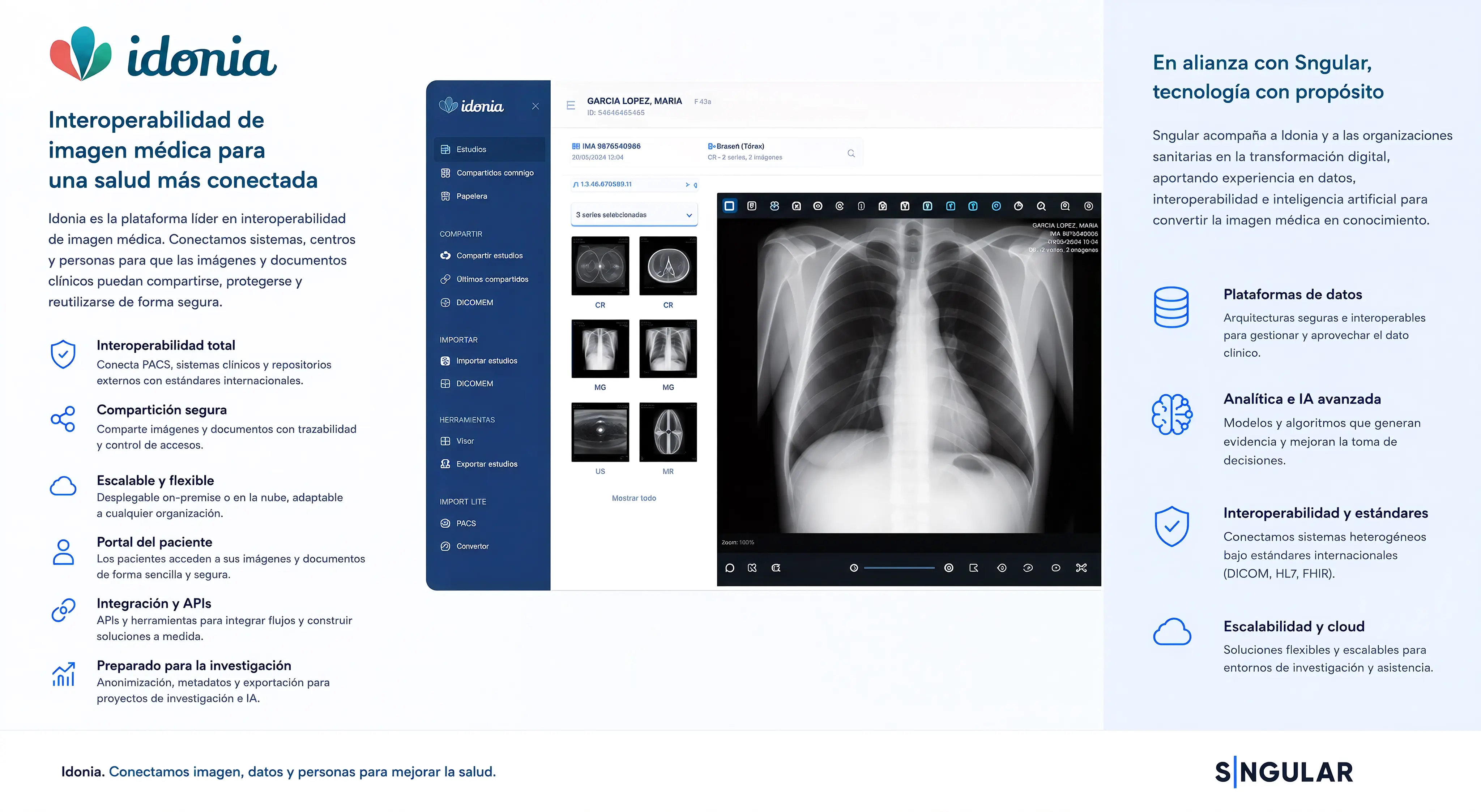
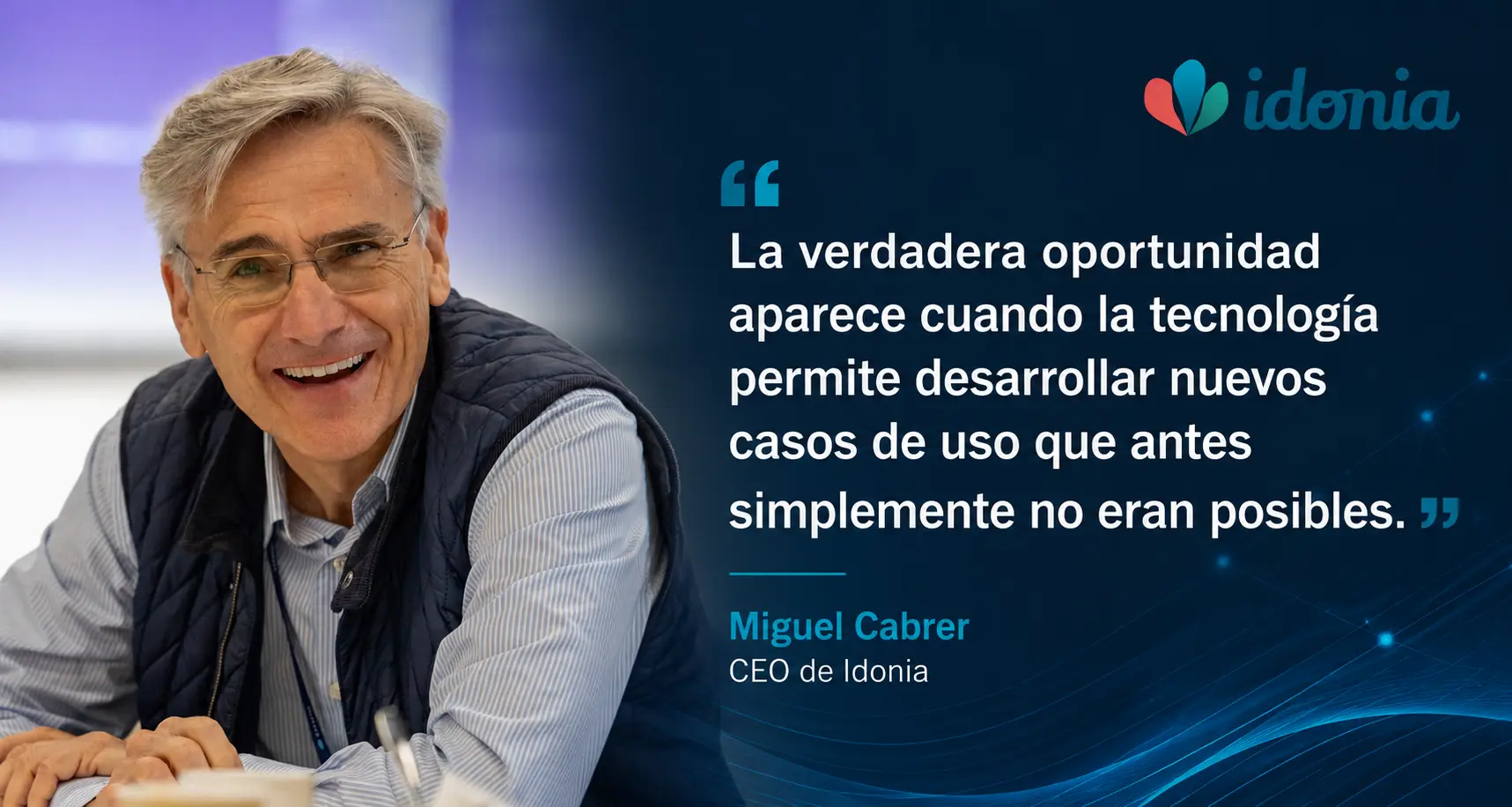
Idonia was created to solve the challenge of moving medical images beyond the hospital. Miguel Cabrer, the company’s CEO, explains that Idonia was founded in 2017 “to make it easier to deliver and distribute images and results”. Its work focuses on situations in which an examination needs to reach a patient, another healthcare provider or an external professional without compromising security or losing its clinical context.
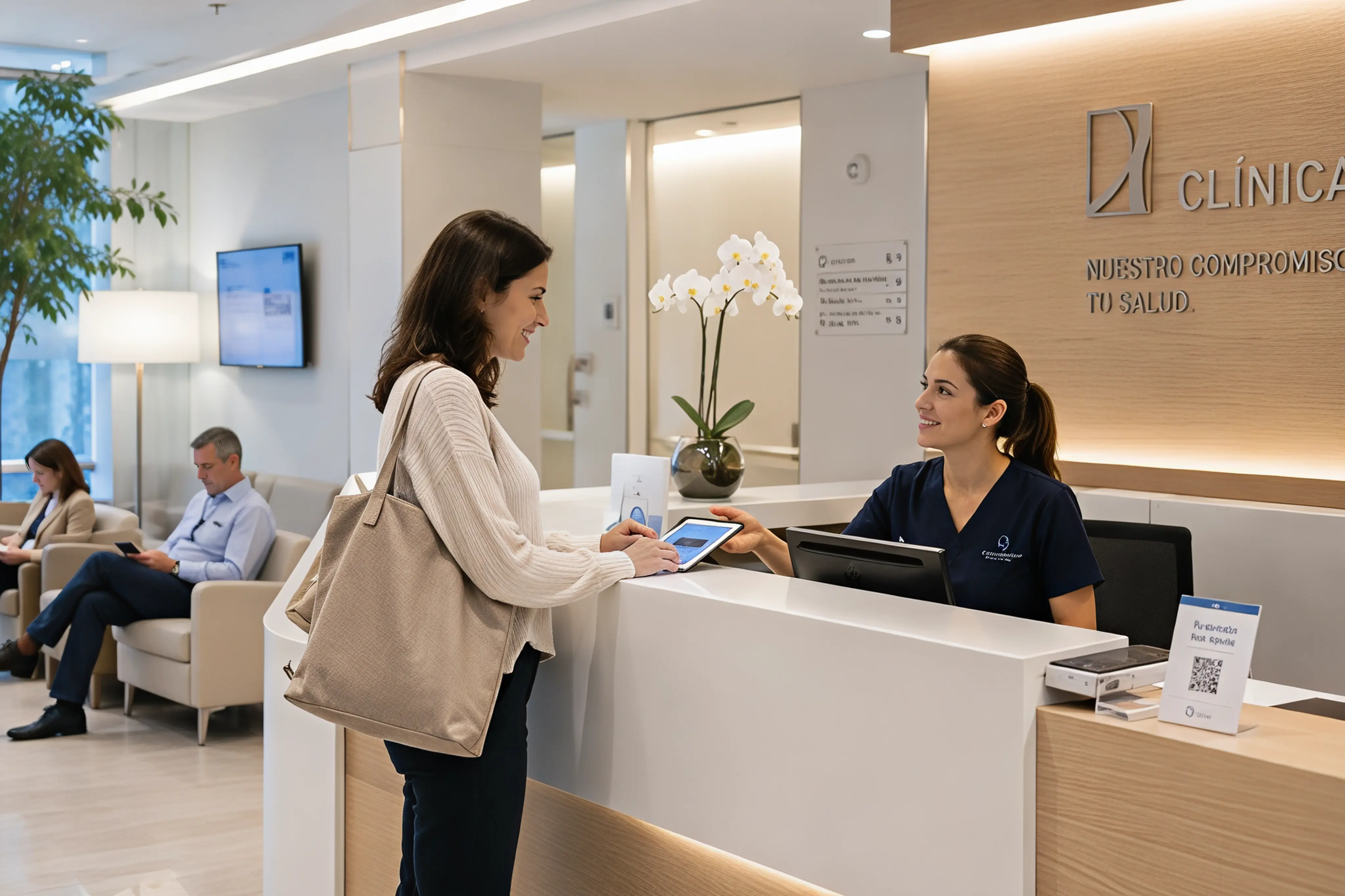
One of its solutions, Idonia Magic Link, replaces physical media with a secure link and PIN. Patients can access their examination from a connected device, view it through a web-based viewer and share it with another professional when seeking a second opinion or continuing their care elsewhere. This approach removes the reliance on CDs and reduces unnecessary travel and administrative work.
The platform can connect to PACS, image repositories, electronic health records, patient portals and corporate applications. Hospitals can retain their existing technology while adding a specialist layer for managing access and information exchange with patients and external organisations.
For patients, the difference is straightforward: they gain a direct way to access their examinations and decide who can see them. For hospitals, the benefits include fewer manual tasks, greater traceability and better-organised referrals.
Integrating the solution into the hospital’s digital experience
Image-exchange technology solves one part of the problem. The other is embedding it within each organisation’s existing channels and processes. A standalone access point may be useful, but it becomes far more valuable when it is incorporated into the patient portal, mobile application or professionals’ usual workflows.
This is where Sngular comes in. Its role is to integrate Idonia’s platform with the hospital’s technology ecosystem so that sharing an examination does not become a separate, disconnected service. This may involve connecting identities and permissions, embedding the image viewer within an application, coordinating information exchange with the PACS or electronic health record, and adapting the process to the needs of each healthcare provider.
Integration is what drives adoption. Patients need to understand what to do, while professionals should not have to leave the tools they already use. Idonia provides the specialist infrastructure required to deliver and share medical images; Sngular helps make it a natural part of the hospital’s digital experience.
What to assess before choosing a solution
The evaluation should cover the entire process: how patients will access their examination, how they will be able to share it and what controls will be available. It is also important to determine whether professionals will be able to view the image together with its clinical context, without introducing additional manual work.
The solution should connect with existing systems rather than create another information silo. Hospitals also need traceability so they can see who has accessed the information, resolve incidents and update permissions whenever necessary.
The goal is not simply to provide a viewer or send links. It is to create a secure and sustainable process covering the entire journey, from the moment an examination is generated to the moment it reaches the person who needs to review it.
Information should follow the patient
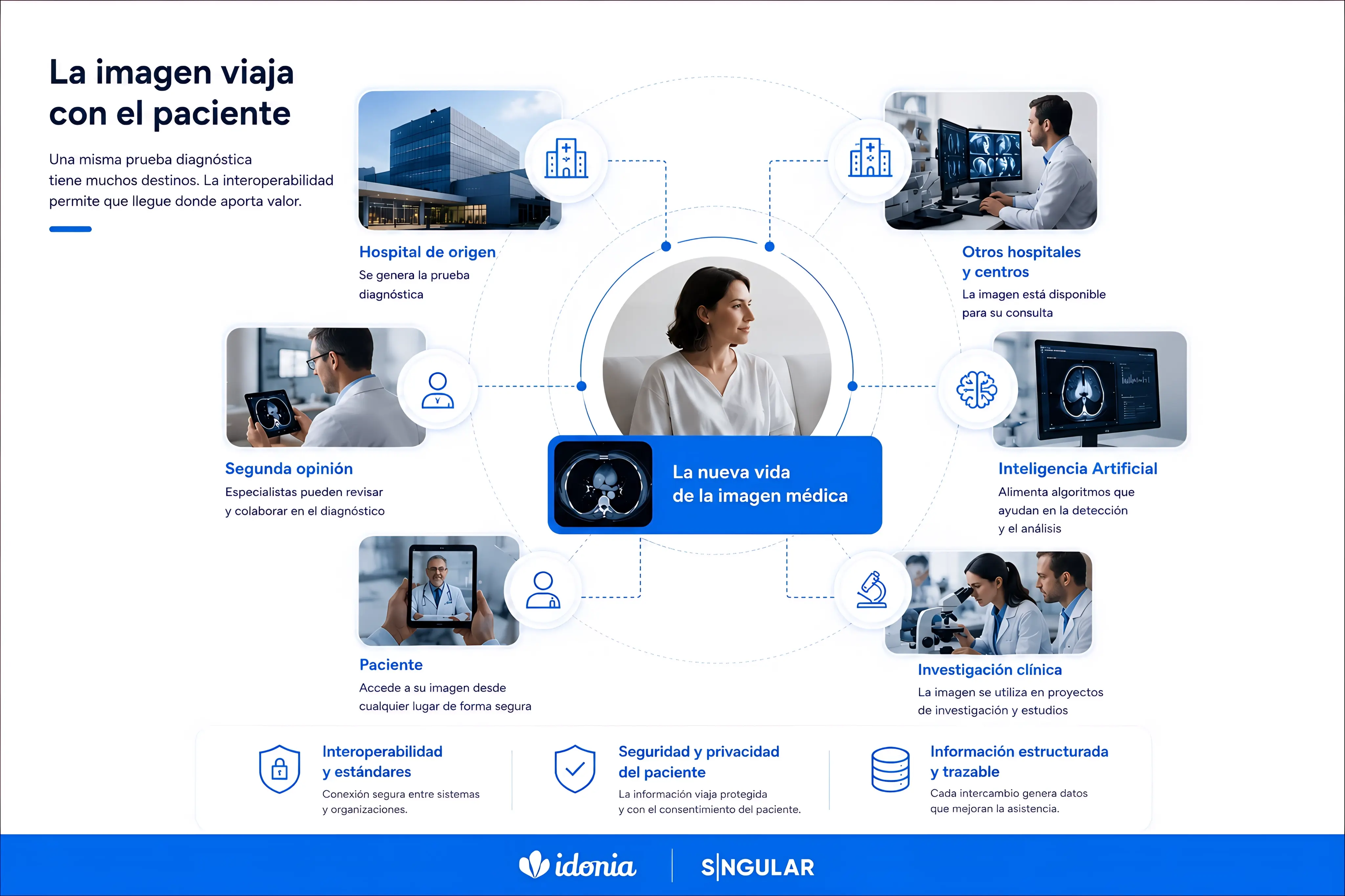
Patient autonomy cannot be achieved simply by adding more documents to a portal. Information must be accessible, understandable and easy to share, and it must be able to follow patients as their care moves from one professional to another.
In medical imaging, this means moving beyond a model in which each hospital acts as the final destination for an examination. The organisation continues to safeguard the information and apply the necessary protections, while the patient gains a practical way to access and use it throughout their care journey.
Sharing medical images between hospitals is ultimately a matter of continuity. When access depends on a CD or manual administrative processes, care becomes fragmented. When the infrastructure connects patients with the professionals and healthcare providers involved in their treatment, the examination is no longer locked inside the organisation where it was generated. Instead, it becomes available when and where it can support better decisions.
About this article
This article was produced by Sngular following a conversation with Miguel Cabrer, CEO of Idonia, whose experience and perspective on interoperability, medical imaging and innovation provided the basis for this discussion.
Rather than presenting a specific technology solution, the purpose of this article is to open a conversation around one of the healthcare sector’s major challenges: how to build infrastructure capable of connecting organisations, data and technology in order to improve care and accelerate innovation.
The collaboration between Idonia and Sngular is rooted in this shared vision. Idonia provides a specialist platform for the secure exchange of medical images and interoperability between organisations, while Sngular contributes its expertise in integration, data platforms, cloud and artificial intelligence to help that infrastructure create greater value for hospitals, healthcare groups and the wider healthcare ecosystem.
Our latest news
Interested in learning more about how we are constantly adapting to the new digital frontier?

Event
November 24, 2025
White Mirror 2025: the blank mirror reflecting what is yet to come

Event
October 20, 2025
Sngular is heading to the Global Health Exhibition 2025 in Riyadh, Saudi Arabia

Event
May 26, 2025
Madrid pulses with the new era of Artificial Intelligence at the Google Cloud Summit 2025
Corporate news
April 22, 2025
Sngular and Fakeeh Care Group join forces to create an AI Center of Excellence in KSA